
WCAG SERIES BEGINNERS
Post 1: Understanding WCAG & 508 Post 2: The Evolution of Web A11y Post 3: WCAG vs Section 508 Post 4: Pour Web Design Post 5: WCAG Success Criteria Post 7: Bringing It All Together Post 8: WCAG & Section 508 Toolkit
A11y Enforcement
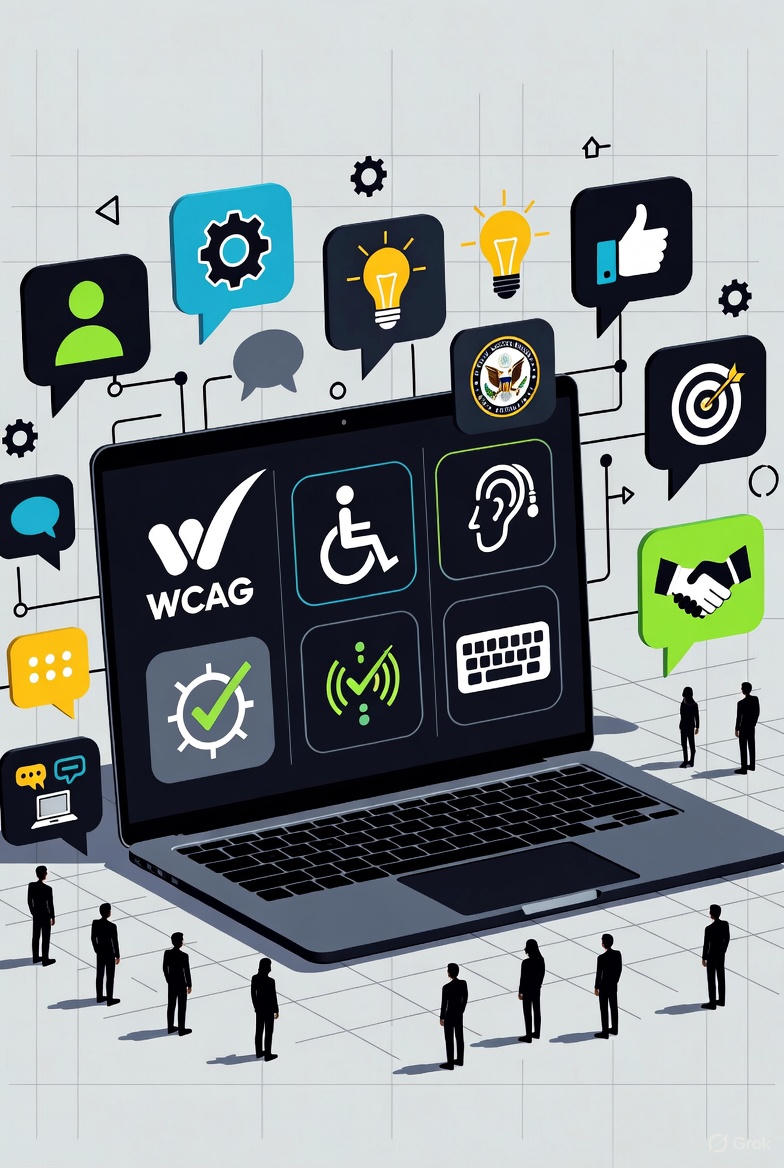
How Developers Can Shape Accessibility
Welcome to the sixth installment of the WCAG Series at Kaffeinated Kodemonkey! By now, you’ve learned the basics of WCAG and Section 508, explored the evolution of web accessibility, compared the two standards, dived into POUR design principles, and understood their focus on inclusive digital experiences. Today, we’re zooming in on how WCAG is developed by the Accessibility Guidelines Working Group (AG WG) under the Web Accessibility Initiative (WAI), how Section 508 is enforced by the U.S. Access Board, and—most excitingly—how you can contribute to accessibility as a developer. Let’s jump in!
WCAG Development: Who’s Building the Future of Accessibility?
The Web Content Accessibility Guidelines (WCAG) are crafted by the Accessibility Guidelines Working Group (AG WG), part of the Web Accessibility Initiative (WAI) under the World Wide Web Consortium (W3C). This group of accessibility experts, developers, and advocates collaborates to ensure WCAG evolves with technology and user needs. They’re currently working on WCAG 3.0, which aims to be more flexible for emerging tech like AI and AR/VR.
The AG WG relies on community input to refine guidelines. This means developers like you can help shape the future of accessibility by sharing feedback or joining discussions.
Section 508 Enforcement: Accessibility in Action
Section 508, part of the U.S. Rehabilitation Act, ensures that federal agencies and their contractors make digital tools accessible. The U.S. Access Board enforces these rules, requiring compliance with WCAG 2.0 Level AA standards. Enforcement means audits, compliance checks, and consequences like lawsuits for non-compliant federal projects. For developers, this underscores the importance of building accessible solutions when working on government contracts.
Why Developers Should Get Involved
Contributing to WCAG or Section 508 efforts isn’t just about compliance—it’s about making the web work for everyone. Here’s why it matters:
- Impact: Your work can help millions with disabilities access digital content.
- Skills: Tackling accessibility sharpens your coding and problem-solving abilities.
- Career Boost: Expertise in WCAG and Section 508 is a standout skill in government or enterprise projects.
How to Contribute to Accessibility
To align with WCAG’s global standards and Section 508’s U.S. requirements, start with these steps:
Engage with the AG WG
Support Open-Source Accessibility
|
Advocate in Your Projects
Stay Connected
|
What’s Next?
WCAG and Section 508 are living standards, evolving through community efforts and enforcement. By contributing, you’re not just coding—you’re building a more inclusive web. Want to share your accessibility journey or ask a question? Drop a comment below or connect with us on X (@KaffeinatedKode)!
In our next post, we’ll explore practical tools and techniques to implement WCAG and Section 508 in your projects. Until then, keep coding for accessibility!
Start Compliance Journey Today
Speak with a DHS Trusted Tester about Kaffeinated Kodemonkey’s POCC and how to ensuer your website meets state, federal, or public requirements for digital content under Title II & III, WCAG and Section 508 Compliace, or any state bills.

Join the conversation:
- Bolg Series - Blog Series on the WCAG from beginner to expert.
- MonkeyFourm - Join our forum, ask question and join in on the conversation.
- Knowledge Base where you can gain dive deeper and get in depth information
- MonkeySupport Need A11y help open a ticket and an A11y Expert will be with you.